
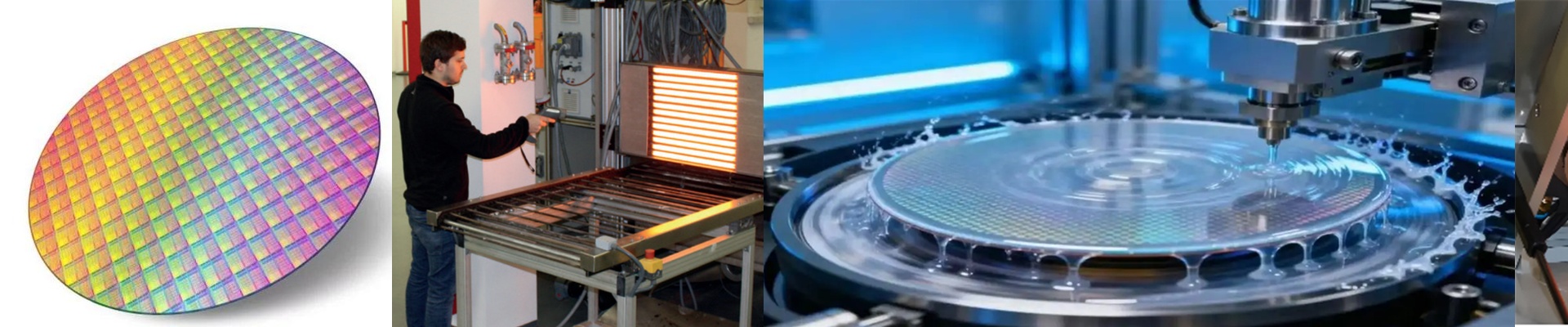
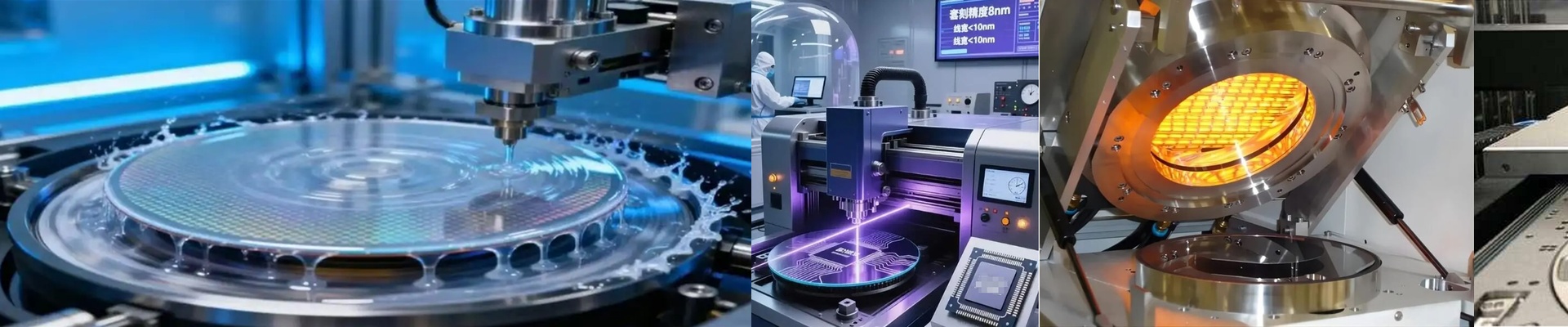


Out on the line, temperature drift isn’t some academic exercise—it’s yield walking out the door. A soft bake that drifts half a degree throws off photoresist thickness and CD control. A hard bake that runs a little hot shifts stress and leaves scum along the edge bead. When the heater starts missing, the tool goes idle, the queue backs up, and every minute of unplanned downtime turns into real money across the fab.
What actually matters, technically
The replacement we built for industrial fabs leans on short-wave infrared elements and a quartz-based thermal path, tuned so wafer-level thermal uniformity stays within ±0.1°C across the bake surface. Temperature repeatability is held tight, so every lot gets the same thermal budget. The design generates zero particles, keeping cleanroom particle counts in the Class 1–100 range without adding extra filtration load. It runs 24/7 with no unplanned stops, and performance stays stable over thousands of hours—measured drift stays low, even through repeated thermal cycling.
Why this lands in litho and photoresist
In lithography and photoresist processing, the bake isn’t just a warm-up—it’s baked into the process definition. Tight control of soft bake and hard bake stabilizes viscosity, adhesion, and solvent removal, which feeds directly into linewidth, profile, and defect density. This heater keeps the temperature profile consistent across the wafer, so you get tighter distributions and fewer lots that need rework. The payoff is fewer scrap wafers, higher first-pass yield, and a cycle time you can plan around. Efficiency comes from the design, not from starving the process—fast settling and efficient conversion cut idle power without eating into your process margin.
The practical details
This is a direct-fit upgrade, but it isn’t plug-and-play. Make sure the mounting envelope, electrical interface, and temperature-control loop match your tool; mismatched termination or control response can cause overshoot. Check cleanroom compatibility against your airflow and vibration profile, and run a short qualification lot to lock the recipe before you flip the whole line.