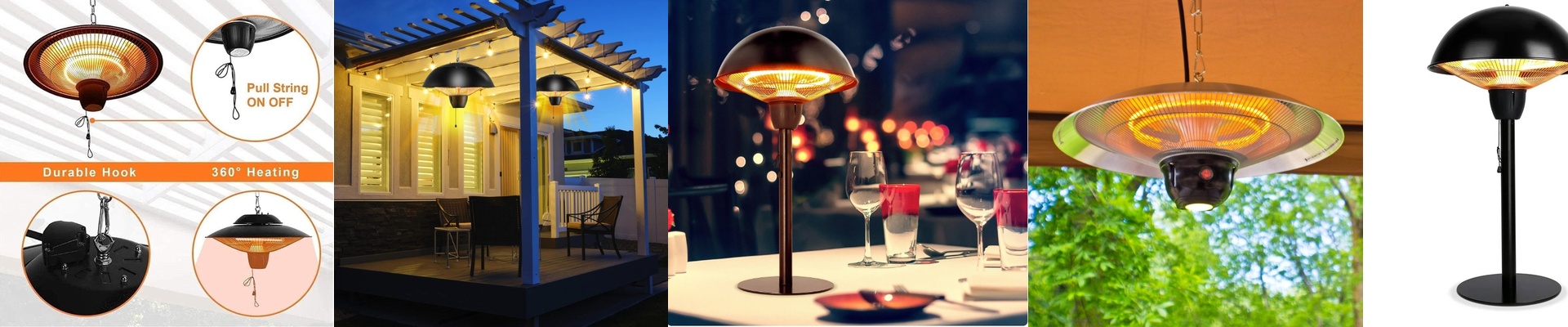


A warehouse in winter is just a big box of wasted heat and wasted space. Heat rises, drifts off into the rafters, and the people on the floor—loading docks, packing stations, maintenance bays—are left working in the cold. You don’t have to heat the whole volume; you just need heat where the work is. That’s exactly what a quartz infrared heater brings to the table.
What matters, technically
We build these around a quartz tube that throws short-wave infrared radiation. The energy travels in a focused beam, warming solid objects and people directly, not the air between them. In the real world, that means warmth hits almost the second you flip the switch—no long warm-up, no heat bleeding away through ventilation. Because the output is focused, placement is everything. Mount the unit overhead or on a solid pole, aim it at the work zones, and the warmth lands where you need it. A built-in thermostat holds the area at the set point, and tip-over protection shuts the heater down if it gets knocked out of position.
Why it works in this setting
In a big warehouse, comfort isn’t just a perk—it affects pace, accuracy, and morale. With directed infrared warmth, workers stay warmer without jacking up the main system. Fewer breaks to warm up. Smoother workflow. Steadier throughput. Energy use gets more intentional, too. Since the heat is targeted, you’re not paying to warm empty aisles and high ceilings. You can run the heater only when the area is in use, which keeps the energy bills from running away on you.
The details you need to get right
Quartz infrared heaters do their best work when they have a clear line of sight to the target. Racking, machinery, and stacked pallets can cast shadows and cut into comfort. And remember, that quartz tube runs hot—keep proper clearance from combustible materials and mount the unit out of reach. On the plus side, there’s almost no moving air, so you’re not stirring up dust and fumes like you do with forced-air systems. If your goal is person-to-warmth efficiency in a large, open space, this is a practical, controllable way to get the job done.