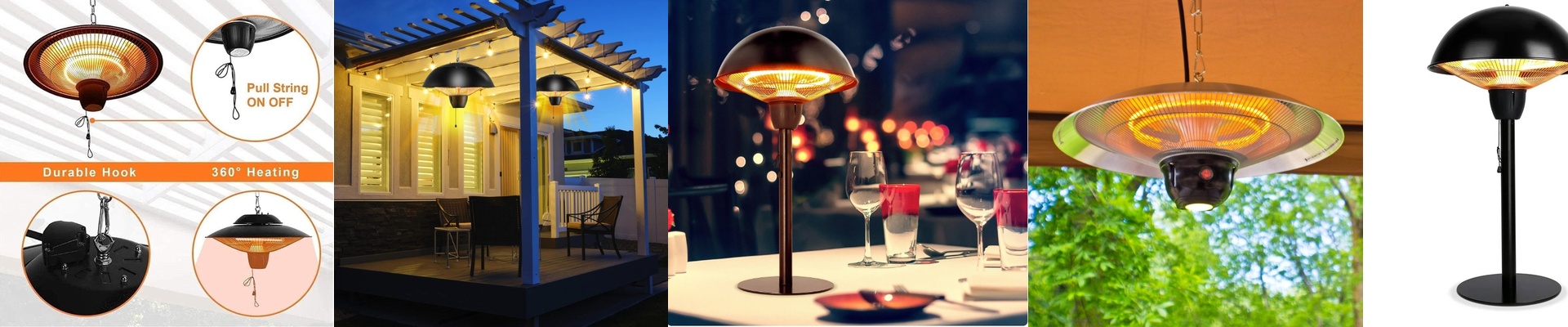


Making Your Outdoor Heaters Actually Smart
Let’s be honest: most patio heaters are just big, clunky boxes that take forever to get going. But if you want to be able to warm up your deck from your phone or just tell your voice assistant to “get the patio ready,” you need more than just a plug and a prayer. You need the hardware to actually talk to each other.
Heat That Hits Fast
We go with short-wave infrared for these. Here is why that matters: most heaters try to warm up the air around you, which is a waste because the wind just blows that heat away. Short-wave radiation is different. It goes straight for the target—you, your guests, or even the stone wall behind you. The second the power kicks in, you feel it.**No waiting. No shivering while the coils warm up.**Just instant warmth.
How the “Smart” Part Works
To get these things talking to your phone, we put a heavy-duty relay or a dimmer right into the power line. This acts as the bridge to your Wi-Fi or Zigbee hub. So, when you tap “On” in your app, the hub tells the relay to close the loop, and the infrared tube fires up. It’s pretty simple, but it has to be built tough. Since this is living outdoors, we use IP-rated enclosures (usually IP44 or IP65). We’re talking sealed gaskets and alloys that don’t rust. It keeps the rain and humidity from frying your control board, which is the last thing you want to deal with in the middle of November.
A Couple of Things to Watch Out For
Now, there is a catch. Adding smart controls adds a bit of weight to your electrical setup. These heaters pull a lot of power. If you try to hook too many of them up to one cheap smart switch, you’re likely to burn the thing out. You’ve got to make sure your wire gauges and circuit breakers can actually handle the load when everything kicks on at once. But once you’ve got that sorted? It’s a dream. You can trigger a “Warm Patio” scene from the couch, and by the time you walk outside with your drink, the air is already perfect.