
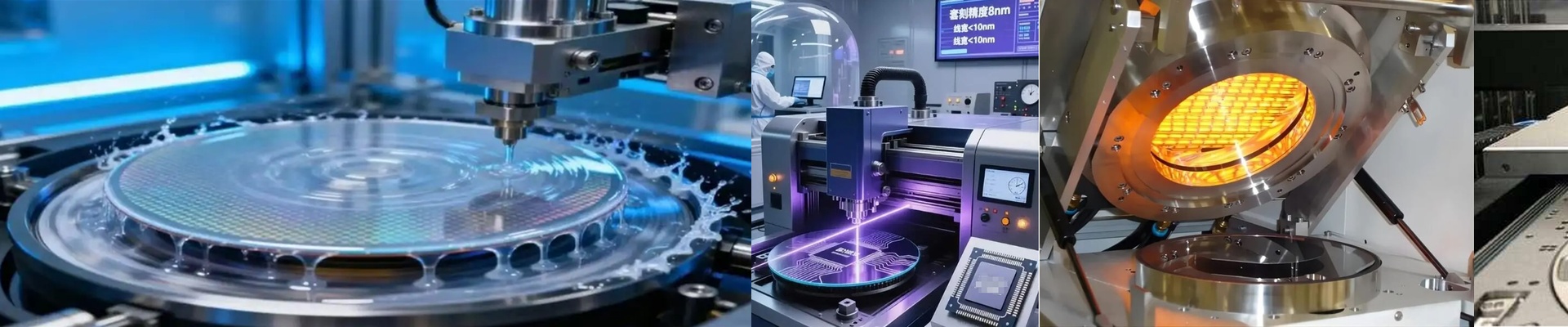
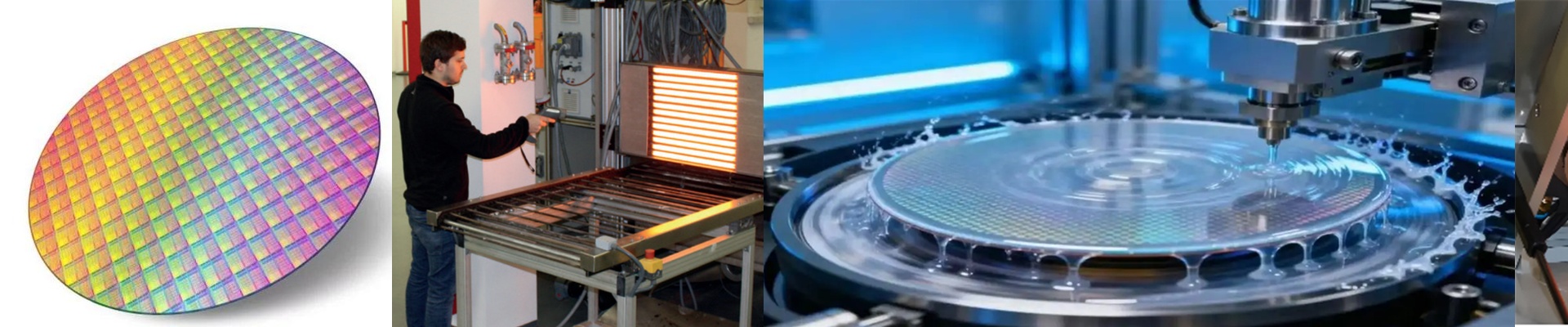

On the packaging line, wafer-level CSP doesn’t leave room for thermal drift. A half-degree swing during photoresist soft bake or encapsulation cure can move critical dimensions, bleed yield, and send wafers back through expensive rework. We built our wafer-level CSP heater to kill that uncertainty at the source. What matters, technically It holds setpoint stability at ±0.1°C and delivers that same tight band for across-wafer uniformity, with repeatability that stays inside the same window. The heating module is cleanroom-ready for Class 1–100, built to stay clean and handle repeated wet-clean cycles without shedding particles. Control is closed-loop, with multi-zone compensation that protects thermal budget—even when you jump recipes fast between soft bake, hard bake, and polymer cure. Why it sticks in real production In wafer-level CSP, thermal consistency writes the story for photoresist profile, underfill flow, and bump formation. You end up with tighter linewidth control, fewer decapsulation defects, and warpage behavior that stays predictable lot to lot. The process window opens up because the heater holds spec from wafer one to wafer a thousand, which cuts scrap and rework. You also save energy, since tight regulation prevents overshoot and keeps things steady without chasing the setpoint. The details that keep you out of trouble Installation comes down to matching the chuck interface and confirming the gasket material is compatible with your solvents and cleaning chemistries. After warm-up, give it a short thermal soak—typically 10–15 minutes—to settle gradients across the platen. The unit is built for 24/7 operation, but like any high-precision thermal platform, mechanical shock and abrupt airflow changes can nudge uniformity until the control loop re-stabilizes.