
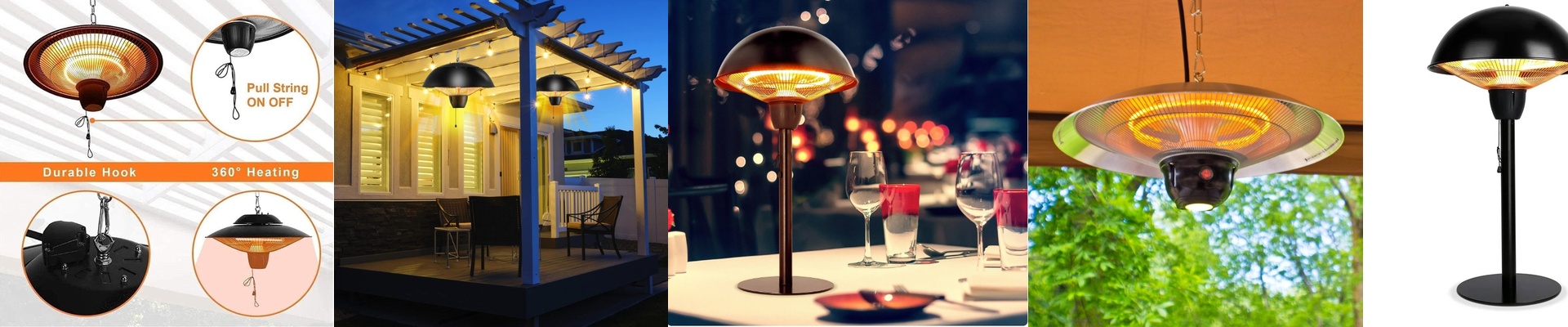


Getting the Wattage Right for Your Bathroom Heater
Nobody likes stepping out of a hot shower into a freezing bathroom. It’s a shock to the system. But if you pick the wrong wattage for your ceiling infrared lamp, you’re either going to be shivering in a cold spot or wasting a ton of electricity. The trick is remembering that these lamps don’t actually heat the air—they heat you. It’s like stepping into sunlight. To make that work, you just need to match the power to the size of your room.
How much power do you actually need?
It really comes down to the footprint of the room. If you’ve got a tiny powder room (under 4m²), a single 400W to 600W shortwave lamp does the trick. For those mid-sized bathrooms (4m² to 8m²), I’d suggest going with a dual-lamp setup or one beefier unit between 800W and 1200W. If you’re dealing with a massive luxury suite over 10m², you’ll probably want a few different “heat zones” so you aren’t freezing on one side of the room. Just be careful not to go overboard. If you put too much power in a small space, you risk overheating the ceiling fixture. On the flip side, if the wattage is too low, the lamp has to work overtime, which wears out the filament faster.
Where to put it (and why it matters)
Shortwave infrared travels in a straight line. It doesn’t care if the air is chilly; it just warms up whatever it “sees.” I usually recommend installing them about 2.2 to 2.6 meters up. Here is the thing: height changes everything. If your ceilings are high, you need more wattage to make up for the distance. A 1000W lamp sitting at 3 meters is going to feel way weaker than a 600W lamp sitting at 2 meters. It’s just physics.
The trade-off: Power vs. Lifespan
More power means the room warms up faster. That’s the win. But there’s a catch. Higher wattage lamps run hotter, which puts more stress on the connectors and the quartz glass. If your ceiling ventilation is poor, you might find yourself replacing the lamp sooner than you’d like. Also, make sure your wiring can actually handle the load. You don’t want flickering lights or a tripped breaker right when you’re trying to dry off. Keep it simple, spec your wires correctly, and you’re good to go.